
Galvanized Steel-Bracket PVC Fish Pond Tank: A Complete Guide for Fish Farming
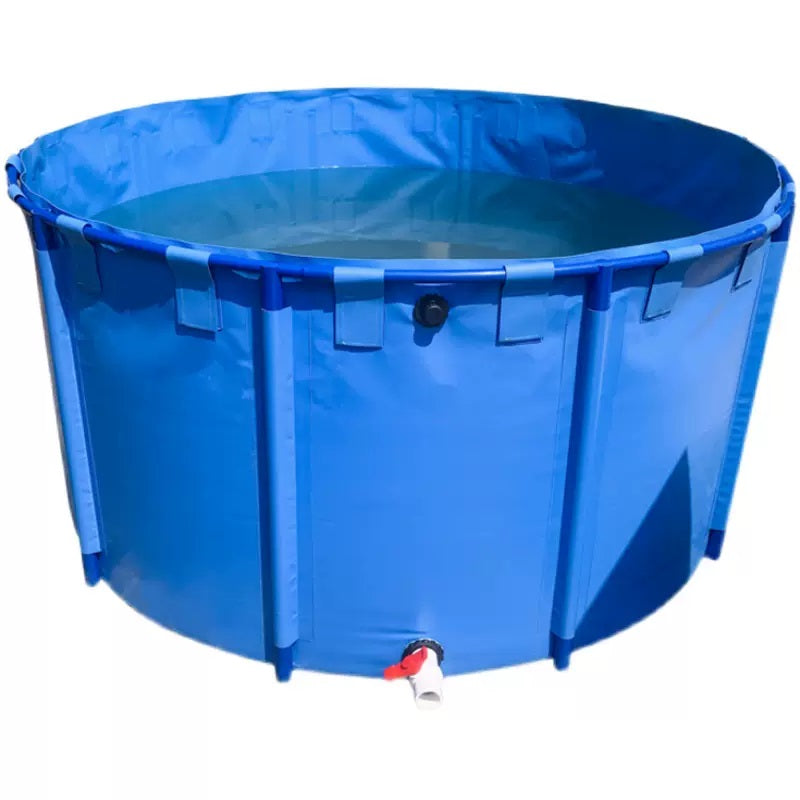
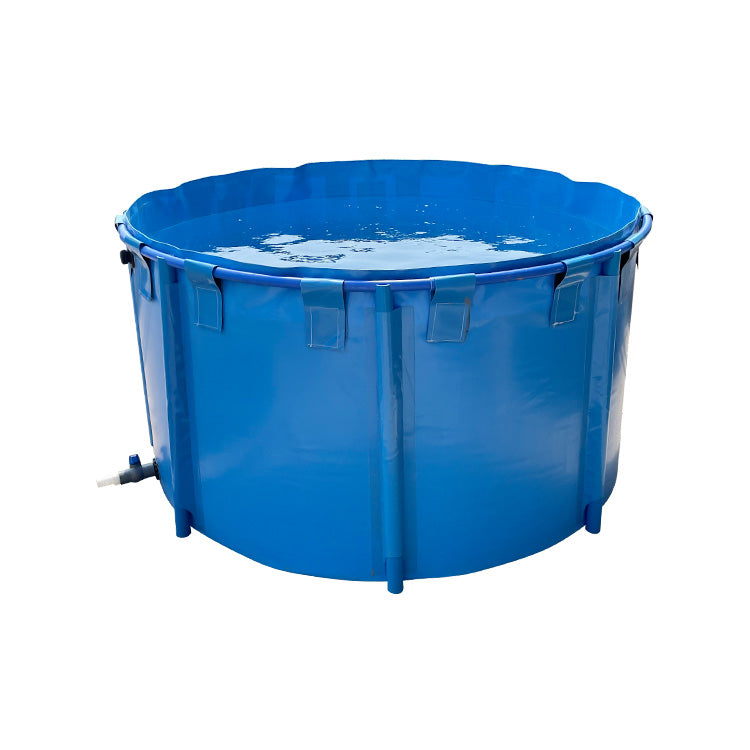
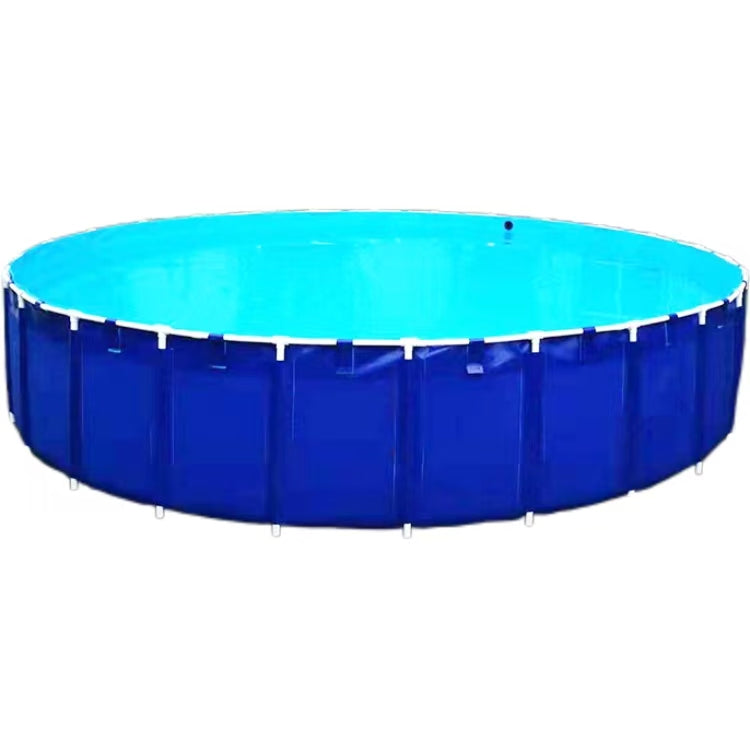
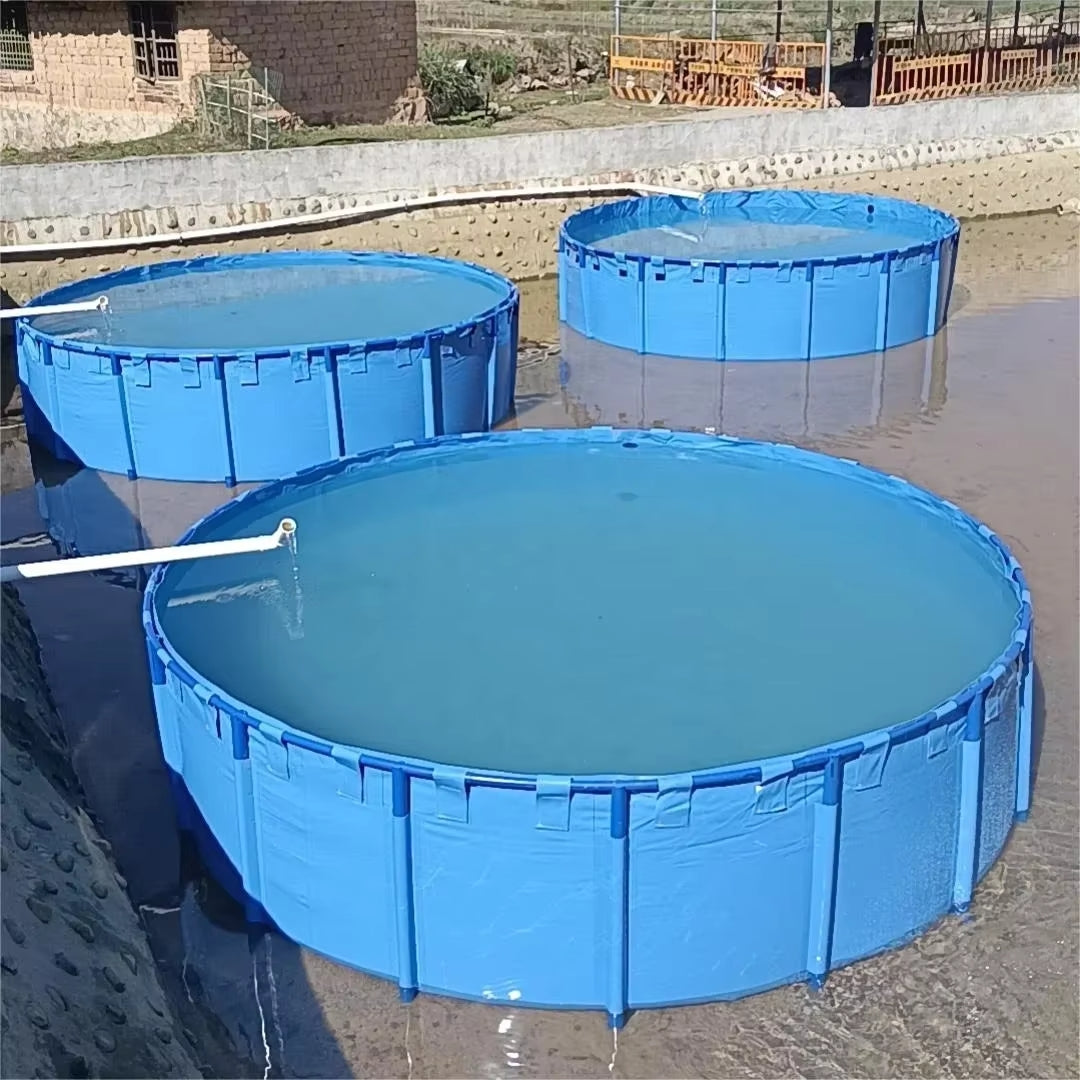
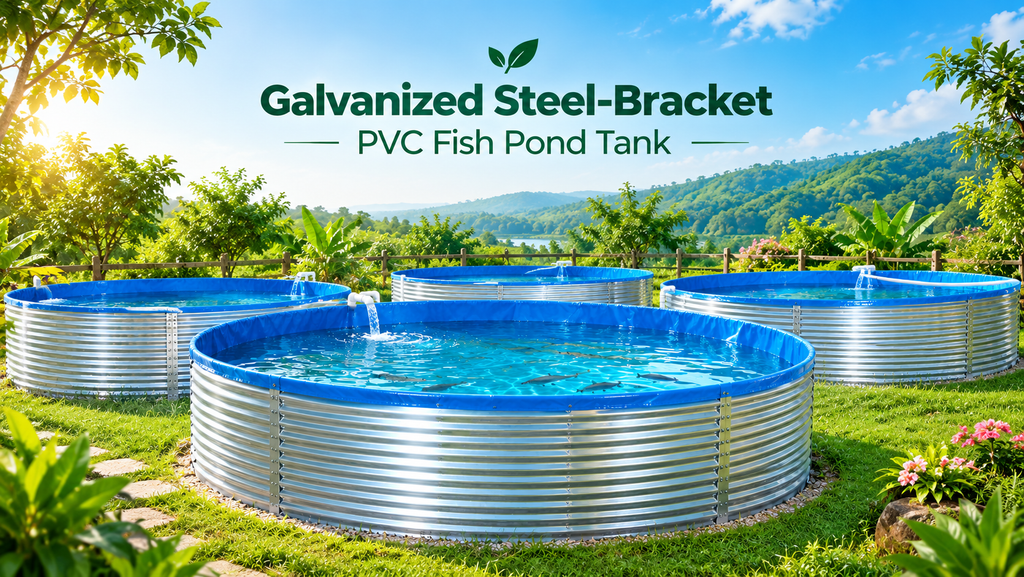
Setting up a fish pond does not always require permanent concrete construction. For fish farmers, hatcheries, aquaponics operators, and agricultural businesses looking for a more flexible solution, a galvanized steel-bracket PVC fish pond tank can provide a practical alternative. This type of modular pond combines a galvanized steel support frame with a heavy-duty PVC liner. The structure is designed for relatively fast assembly, relocation, and repeated use, while the smooth PVC liner provides a waterproof environment for aquaculture and water storage. The featured RAINBOW system is available from 8 m³ to 200 m³+, with custom sizes available.

What Is a Galvanized Steel-Bracket PVC Fish Pond?
A galvanized steel-bracket PVC fish pond consists of two primary components:
● Galvanized steel brackets that create the supporting framework
● Heavy-duty PVC liner that holds the water
The steel framework provides structural stability, while the PVC liner creates the water-containing surface. The featured tank uses 560gsm or 650gsm PVC, with custom thickness available. It is also listed as UV-resistant, waterproof, reusable, and suitable for indoor and outdoor applications.
This modular design can be used for tilapia farming, catfish production, shrimp aquaculture, koi ponds, aquaponics, hatcheries, and agricultural water storage.
Choose the Right Tank Size
Before assembling the pond, determine how much water your operation needs.
The tank is available in capacities ranging from 8 m³ to more than 200 m³. The appropriate size depends on the number and species of fish, stocking density, available space, filtration system, and planned production volume.
For example:
|
Pond Size |
Potential Use |
|
8–10 m³ |
Small-scale fish farming or testing |
|
20–30 m³ |
Backyard or small commercial aquaculture |
|
50–100 m³ |
Larger fish-farming operations |
|
100–200 m³+ |
Commercial aquaculture projects |
Avoid choosing a tank solely based on available space. Water volume should also match the requirements of the fish species and management system.
Prepare a Suitable Installation Area
Proper site preparation is essential before assembling the tank.
Choose a level, stable surface capable of supporting the weight of the filled pond. Remember that water is heavy, so a large pond can place substantial load on the ground.
Clear away:
● Sharp stones
● Broken glass
● Metal pieces
● Tree roots
● Sharp branches
● Other objects that could damage the PVC liner
A clean and properly prepared foundation helps reduce the risk of liner damage and supports a more stable installation.
Assemble the Galvanized Steel Frame
The next step is to build the supporting structure.
The galvanized steel brackets are connected to create the pond's frame. The galvanized coating helps the steel resist rust and corrosion during outdoor use. According to the product specifications, the frame is designed to provide structural stability in demanding outdoor environments.
Follow the supplied assembly instructions carefully and ensure that the frame is properly aligned before installing the liner.
The modular structure is one of the main advantages of this pond system because it can be assembled, dismantled, and relocated without permanent concrete construction.
Position the PVC Liner
Once the frame is securely assembled, carefully position the PVC liner inside it. The liner should sit evenly within the steel structure without excessive folds, twisting, or unnecessary tension. The featured system uses a heavy-duty PVC liner designed for waterproof containment, UV resistance, and resistance to punctures. The product page also describes the liner as suitable for aquaculture and fish farming. Take extra care during installation because sharp tools, metal edges, or debris can damage the liner.
Check the Pond Before Filling
Do not immediately fill the pond to full capacity.
First, inspect the entire structure and liner.
Check:
● Steel bracket connections
● Frame alignment
● Liner positioning
● Bottom surface
● Outlet areas
● Potential folds or pressure points
● Any visible damage
A small initial amount of water can be added to help the liner settle into position. At this stage, inspect the pond again before continuing to fill it.
Fill the Pond Gradually
Once the frame and liner have been checked, begin filling the tank.
Filling gradually allows you to monitor how the liner and steel frame respond as the water level rises.
Watch for:
● Uneven frame movement
● Liner displacement
● Unexpected leakage
● Excessive stress on connections
● Problems around outlets
If something appears incorrect, stop filling and correct the problem before adding more water.
Prepare the Water Before Adding Fish
A properly assembled pond is only the beginning of an aquaculture system. Before introducing fish, the water should be prepared according to the requirements of the species being raised. Depending on the aquaculture setup, this may involve filtration, aeration, temperature management, water-quality testing, and biological preparation. The tank itself provides the physical water-holding environment, but maintaining healthy aquatic conditions requires appropriate water-management equipment and routine monitoring. The product page specifically highlights the smooth PVC liner as useful for cleaning and efficient water circulation.
Add Your Aquaculture Equipment
The equipment required will depend on the fish species and farming method.
A typical system may include:
● Water pump
● Mechanical filtration
● Biological filtration
● Aeration equipment
● Water inlet
● Drainage or outlet system
● Water-quality monitoring equipment
● Feeding equipment
For aquaponics, the pond can also be integrated with plant-growing systems.
The product is listed for both traditional aquaculture and aquaponics, where fish production and plant cultivation are combined.
Introduce Fish Carefully
Fish should only be introduced after the water environment is ready.
Avoid immediately adding a large number of fish simply because the tank has a high capacity. Stocking levels should be based on species, fish size, filtration capacity, aeration, water quality, and management practices.
For commercial production, gradually developing the system can make it easier to monitor water conditions and identify potential problems.
Establish a Regular Maintenance Routine
One of the benefits of a smooth PVC liner is that it can simplify cleaning compared with some rough or irregular pond surfaces.
Regularly inspect:
● PVC liner condition
● Steel frame connections
● Water quality
● Pumps and filters
● Aeration equipment
● Drainage outlets
● Areas around the pond
The manufacturer describes the system as requiring relatively low maintenance and lists a service life of approximately 5–10 years, depending on conditions and use.
Why Choose a Galvanized Steel PVC Fish Pond?
Compared with permanent ponds, a modular steel-bracket PVC tank offers several practical advantages.
|
Feature |
Steel-Bracket PVC Pond |
Concrete Pond |
Earthen Pond |
|
Installation speed |
Fast |
Slow |
Slow |
|
Portability |
Excellent |
None |
None |
|
Relocation |
Easy |
Impossible |
Impossible |
|
Leak resistance |
Excellent |
Good |
Poor |
|
Water-quality control |
Excellent |
Good |
Limited |
|
Maintenance |
Low |
Medium |
High |
|
Custom sizes |
Available |
Difficult |
Limited |
|
Construction |
Modular |
Permanent |
Site-dependent |
These differences make the modular PVC pond particularly useful when flexibility and relocation are important.
Common Applications
The tank can support a wide range of applications beyond standard fish farming.
Commercial Fish Farming
The tank can be used for commercial production of species such as tilapia and catfish.
Shrimp Aquaculture
It can also be used for shrimp hatcheries and grow-out applications.
Aquaponics
The pond can form the fish-production component of an aquaponics system.
Fish Hatcheries
Its controlled structure can be useful for hatchery and nursery applications.
Koi Ponds
The tank can also be configured for ornamental fish keeping.
Agricultural Water Storage
When not being used for fish production, the system can also support irrigation and agricultural water management.
Important Setup Checklist
Before filling your galvanized steel-bracket PVC fish pond, check the following:
✓ Select the correct capacity for your fish and production goals.
✓ Prepare a level surface free of sharp objects.
✓ Assemble the galvanized frame securely.
✓ Position the PVC liner evenly inside the frame.
✓ Inspect the liner for possible damage.
✓ Check outlets and connections before filling.
✓ Fill gradually and monitor the structure.
✓ Prepare water quality before introducing fish.
✓ Install appropriate filtration and aeration.
✓ Establish regular maintenance and water-quality monitoring.
FAQs
1. Is a galvanized steel PVC fish pond difficult to install?
The modular structure is designed for relatively fast assembly without permanent construction or specialized construction equipment.
2. Is the PVC liner suitable for fish farming?
Yes. The manufacturer states that the heavy-duty PVC liner is designed for aquaculture and water-containment applications.
3. Can the fish pond be installed outdoors?
Yes. The system is listed as UV-resistant and suitable for outdoor aquaculture and water-storage applications.
4. What sizes are available?
The listed capacity range is 8 m³ to 200 m³+, with custom sizes available for different aquaculture requirements.
5. Can the tank be relocated?
Yes. Its modular construction allows the pond to be dismantled and relocated more easily than a permanent concrete pond.
6. What fish can be raised in this type of pond?
The product is listed for applications including tilapia, catfish, shrimp, koi, and general aquaculture systems.
Final Thoughts
Setting up a galvanized steel-bracket PVC fish pond tank is a practical process when the installation is planned carefully. The key steps are choosing the right capacity, preparing a stable surface, assembling the galvanized steel frame, positioning the PVC liner, checking the structure, and preparing the water and filtration system before adding fish.
The RAINBOW system combines a galvanized steel support structure with 560gsm/650gsm heavy-duty PVC, offers capacities from 8 m³ to 200 m³+, and is designed for applications ranging from commercial aquaculture and hatcheries to aquaponics and agricultural water storage.
For fish farmers who need a pond that can be assembled, expanded, dismantled, or relocated more easily than a permanent concrete structure, a modular galvanized steel PVC pond can be a flexible option for modern aquaculture.
Related post
06
Oct