
20L Portable Fuel Tank: What to Consider Before Choosing a Flexible Bladder
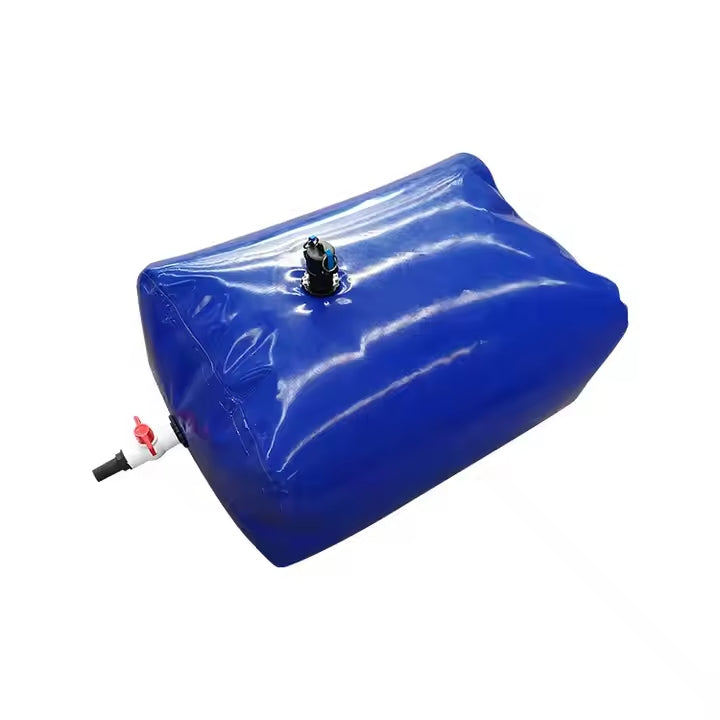
Portable fuel storage can be challenging when space, weight, and mobility are important. Traditional metal drums and rigid jerry cans can provide reliable fuel containment, but they continue to occupy their full footprint even when empty. For off-road travel, emergency preparedness, remote work, and other mobile applications, a 5-gallon foldable fuel bladder offers a more compact approach. The RAINBOW Flexible 5-Gallon Foldable Fuel Bladder is designed to hold approximately 20 liters (5 gallons) of fuel and can be folded flat when empty. Its lightweight construction, flexible design, and compatibility with several fuel types make it a portable option for temporary fuel transportation and backup storage.

What Is a 5-Gallon Foldable Fuel Bladder?
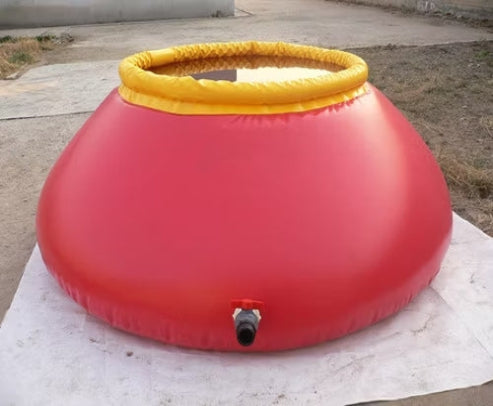
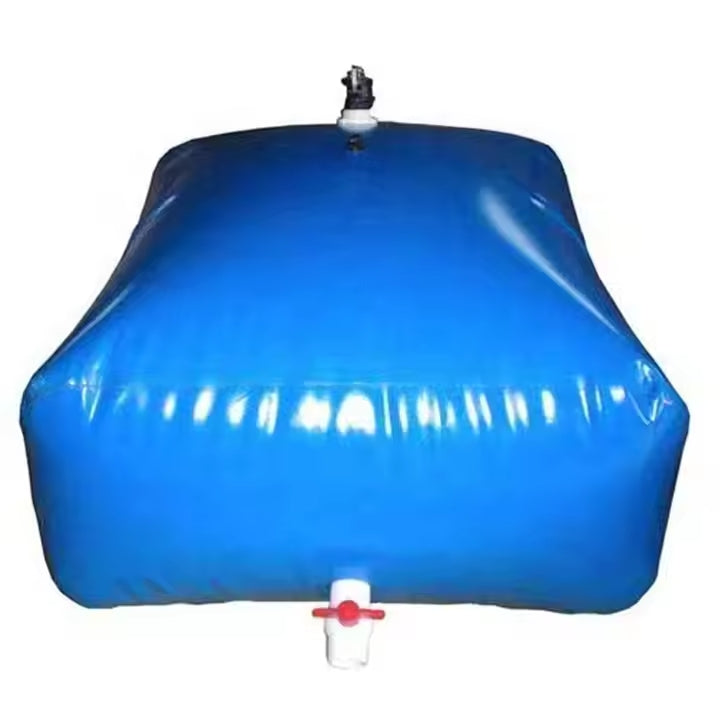
A foldable fuel bladder is a flexible fuel container designed to expand when filled and collapse when empty. Unlike a traditional rigid jerry can, it does not require a fixed shape for storage.
The featured model has a capacity of approximately 20 liters, weighs around 1.30–1.40 kg, and is designed for gasoline, diesel, Avgas, and Jet A1 applications.
This combination makes it particularly useful when additional fuel capacity is needed without adding a bulky rigid container to a vehicle, boat, aircraft, or equipment storage area.
1. Start With the Required Fuel Capacity
The first consideration should be how much additional fuel you actually need.
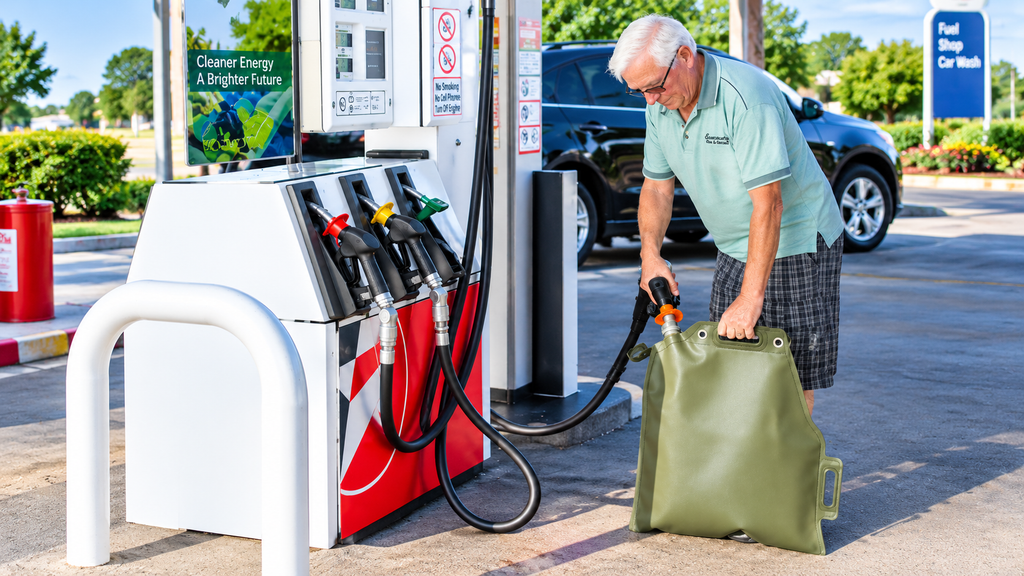
A 5-gallon or 20-liter bladder is a relatively compact option for temporary or backup fuel storage. It can provide additional fuel capacity for situations where access to a fuel station may be limited.
Potential scenarios include:
● Off-road trips
● Overland travel
● Camping
● Remote construction work
● Generator backup
● Emergency preparedness
● Utility operations
● Marine activities
The product page identifies these types of applications for the 20L fuel bladder.
Before selecting the capacity, consider your equipment's fuel consumption, expected travel distance, and how frequently you can access a reliable fuel supply.
2. Consider Weight and Portability
When transporting fuel, the container itself adds weight before any fuel is added.
The featured bladder weighs approximately 1.3–1.4 kg, according to its technical specifications.
Its flexible structure also makes it easier to store in spaces where a rigid container may be inconvenient.
For example, an empty bladder can be folded flat and stored in:
● Vehicle storage compartments
● Outdoor equipment
● Boats
● Emergency kits
● Field equipment
● Other designated fuel-storage areas
This space-saving characteristic is one of the main differences between flexible and rigid fuel containers.
3. Look for Appropriate Fuel Compatibility
Not every fuel container is designed for every fuel type.
The RAINBOW 5-gallon bladder is specified for gasoline, diesel, Avgas, and Jet A1 applications.
Before purchasing any portable fuel bladder, verify that the material and fittings are specifically compatible with the fuel you intend to store.
This is particularly important when the container may be used across different applications, such as vehicle fueling, aviation backup fuel, marine operations, or generator supply.
4. Evaluate the Construction and Performance Specifications
A portable fuel bladder needs to withstand more than simply holding liquid. Transportation can expose it to handling, temperature changes, and outdoor conditions.
The product specifications list:
|
Specification |
Details |
|
Capacity |
Approx. 5 gallons / 20L |
|
Weight |
1.30–1.40 kg |
|
Construction |
Flexible fuel-grade material |
|
Compatible fuels |
Gasoline, Diesel, Avgas, Jet A1 |
|
Temperature range |
-41°C to +85°C |
|
Burst pressure |
≥0.48 MPa |
|
Drop test resistance |
4.5 meters |
|
Inlet/outlet diameter |
36 mm |
|
Surface resistance |
2×10⁹Ω |
|
Design |
Foldable and portable |
|
Reusable |
Yes |
|
Standard listed |
GJB4219A-2013 |
These specifications can help buyers compare a flexible fuel bladder with other portable fuel-storage options.
5. Consider Anti-Static Features
Fuel handling requires careful attention to ignition and static-related risks.
The featured bladder lists a surface resistance of 2×10⁹Ω and describes an anti-static design intended to improve safety when the product is used according to proper fuel-handling practices.
However, a fuel container should never be treated as inherently risk-free. Users should follow applicable fuel-storage, transportation, ventilation, grounding, handling, and fire-safety requirements for their location and fuel type.
6. Think About Temperature Conditions
Portable fuel storage may be exposed to very different climates.
The listed operating temperature range for this bladder is -41°C to +85°C.
This makes temperature specifications an important purchasing factor for users traveling through hot or cold environments.
For outdoor or remote use, however, the container should still be protected from unnecessary physical damage and stored according to applicable fuel-safety requirements.
7. Compare Foldable Bladders With Traditional Jerry Cans
The biggest difference between a foldable bladder and a rigid jerry can is what happens when the container is empty.
|
Feature |
5-Gallon Foldable Fuel Bladder |
Traditional Jerry Can |
Metal Fuel Drum |
|
Capacity |
Approx. 20L |
Varies |
Usually larger |
|
Empty storage |
Folds flat |
Fixed shape |
Fixed shape |
|
Weight |
Approx. 1.3–1.4 kg empty |
Generally heavier |
Heavy |
|
Portability |
High |
Moderate |
Low |
|
Space efficiency |
High |
Moderate |
Low |
|
Emergency deployment |
Fast |
Moderate |
Slower |
|
Vehicle storage |
Space-saving |
Requires fixed space |
Difficult |
|
Reusable |
Yes |
Yes |
Yes |
|
Flexible |
Yes |
No |
No |
The choice should depend on your application, local regulations, required capacity, transportation method, and fuel-handling requirements.
8. Consider Where You Will Use It
A portable fuel bladder can be useful in situations where fixed fuel infrastructure is limited.
According to the product page, common applications include off-road and overland travel, camping, aviation backup, marine and boating fuel supply, emergency preparedness, military and field operations, police and rescue operations, generator backup, remote-site transportation, and temporary industrial fuel storage.
For mobile users, the ability to carry additional fuel without permanently dedicating significant storage space can be particularly useful.
9. Pay Attention to Empty Storage
Storage requirements are often overlooked when purchasing fuel containers.
A rigid 5-gallon container occupies approximately the same amount of space whether it is full or empty. A foldable bladder provides a different solution: once emptied and properly prepared for storage, it can be folded flat.
This can be useful for users who only need additional fuel capacity during specific trips or projects.
For example, an overland traveler may carry the bladder during a remote journey and then store it compactly when returning to normal travel conditions.
10. Check the Dimensions and Transportation Method
The bladder's listed dimensions vary according to its loading orientation:
● Air carrying size: 620 × 540 mm
● Vertical loading size: 530 × 460 × 270 mm
● Horizontal loading size: 600 × 480 × 180 mm
These measurements should be compared with your available storage space before purchasing.
If the bladder is intended for a vehicle, boat, aircraft, or field kit, confirm that the storage area is suitable for the filled container and complies with the relevant safety requirements.

How to Choose the Right 5-Gallon Fuel Bladder
Before purchasing, consider the following checklist:
✓ Capacity: Is 20 liters enough for your intended use?
✓ Fuel compatibility: Is the bladder designed for your specific fuel?
✓ Material: Is the construction intended for fuel storage?
✓ Weight: Can you transport the empty and filled container safely?
✓ Dimensions: Does it fit your vehicle or equipment storage area?
✓ Temperature: Is its specified operating range suitable for your environment?
✓ Fittings: Are the inlet and outlet compatible with your intended system?
✓ Storage: Can it be safely stored when empty?
✓ Regulations: Does its use comply with local fuel-storage and transportation requirements?
Frequently Asked Questions
1. How much fuel does the bladder hold?
The bladder is designed for approximately 20 liters, or 5 gallons, of portable fuel storage.
2. Can the 5-gallon fuel bladder be folded?
Yes. Its flexible construction allows it to fold flat when empty, making transportation and storage more convenient.
3. What fuels can it store?
The product specifications list gasoline, diesel, Avgas, and Jet A1 as compatible fuel types.
4. How much does the empty bladder weigh?
The listed weight is approximately 1.30–1.40 kg.
5. Is the bladder suitable for outdoor use?
The manufacturer describes it as suitable for demanding outdoor, industrial, and field applications, with a listed temperature range of -41°C to +85°C.
6. Who can use a portable fuel bladder?
The product page lists applications involving farmers, off-road users, contractors, utility crews, emergency-response teams, and outdoor adventurers, among others.
Final Thoughts
Choosing a 5-gallon foldable fuel bladder is primarily about balancing capacity, portability, fuel compatibility, storage space, and operating conditions. For users who need temporary additional fuel capacity, a flexible bladder can offer an alternative to conventional rigid containers.
The RAINBOW 20L model combines approximately 5-gallon capacity, 1.3–1.4 kg empty weight, foldable construction, multiple listed fuel compatibilities, and compact storage dimensions.
For off-road travel, remote operations, emergency preparedness, marine activities, generator backup, and other temporary fuel-storage applications, these characteristics can make a foldable design worth considering provided it is used and transported in accordance with applicable fuel-safety requirements.